
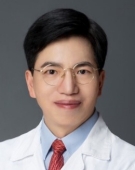
Prof. Sun Kim
Seoul
National University
Sun Kim is Professor in the School of Computer Science and Engineering, Adjunct Professor of Biological Sciences, and Director of Bioinformatics Institute (2011-2021) at Seoul National University. He is a member of National Academy of Engineering, Korea and head of a brain and computing infrastructure division of Korea National Artificial Intelligence Committee (2024-2026). Until recently, he was President of Mogam Institute of Biomedical Research (2022-2024). Before joining SNU, he was Chair of Faculty Division C; Director of Center for Bioinformatics Research, an Associate Professor in School of Informatics and Computing at Indiana University (IU) Bloomington. Prior to joining IU in 2001, he worked at DuPont Central Research from 1998 to 2001, and at the University of Illinois at Urbana-Champaign from 1997 to 1998. Sun Kim received B.S and M.S and Ph.D in Computer Science from Seoul National University, KAIST and the University of Iowa, respectively. Sun Kim is a recipient of Outstanding Junior Faculty Award at Indiana University 2004, US NSF CAREER Award in 2003, and Outstanding Faculty Award in research 2021 in the College of Engineering at Seoul National University. He is actively contributing to the bioinformatics community, having serving on the editorial board for journals including editors for the METHODS journal (2013-2022) and, associate editor-in-chief for ACM/IEEE Transactions on Computational Biology and Bioinformatics (2019-2021), and also on the board of directors for ACM SIG Bioinformatics and for education for the IEEE Computer Society Technical Committee on Bioinformatics. Among many service activities in Korea, he served on Samsung Future Technology Committee (2016-2018), a member of The National Science and Technology Council of the Korean Government (2019-2020), President of Korea Artificial Intelligence Society (2016-2018) and Vice President of Korea Society of Bioinformatics and Systems Biology (2011-present).

Assit. Prof.
Tewin Tencomnao
Chulalongkorn University
Dean, Faculty of Allied Health Sciences
Tewin Tencomnao has focused his research on Natural
Products for Neurodegeneration and Anti-Ageing at
Chulalongkorn University. With more than 10,664
citations and h-index 36, he has successfully upgraded
the research quality in this field as evidenced by more
than 200 publications. His research team employed a
variety of experimental models such as cell culture,
yeast and animal models to elucidate the mechanisms of
natural products to fight against neurotoxicity,
neuroinflammation, neurodegeneration and ageing.
Speech Title: "Integrated Model Approaches for Identifying Natural Products Against Neurodegeneration and Ageing "
Abstract: This keynote explores the transformative role of artificial intelligence and statistical modeling in omics research, focusing on DNA shape motif discovery and peptide prediction. Recent advances have enabled the identification of DNA shape motifs using multiple structural features, moving beyond traditional sequence-based approaches. The presentation introduces a generalized, end-to-end framework for motif discovery, leveraging probabilistic models and novel algorithms (SMEM, SMEM-Gibbs, Gibbs sampling) to enhance accuracy and efficiency. Benchmarking demonstrates robust motif localization and stable enrichment patterns across diverse genomic datasets. In parallel, the development of TP-LMMSG—a graph neural network for peptide prediction—incorporates flexible amino acid property representation and advanced language model embeddings. This approach addresses key bottlenecks in therapeutic peptide modeling, such as data quality and combinatorial complexity, and achieves state-of-the-art performance on antimicrobial, antiviral, and anticancer peptide datasets. Together, these innovations highlight the synergy between AI and omics, offering new insights into biomolecular patterns, molecular interactions, and therapeutic design. The keynote will discuss methodological breakthroughs, practical applications, and future directions for integrating AI-driven analytics in biological research.

Assoc. Prof. Ka-Chun Wong
City University of Hong Kong
Ka-Chun Wong was born and raised in Hong Kong where he was lucky enough to be immersed in a multi-cultural environment. He received his B.Eng. in Computer Engineering from United College, The Chinese University of Hong Kong in 2008. He has also obtained his M.Phil. degree in the Department of Computer Science and Engineering at the same university in 2010. From 2011 to 2014, he has spent 3.5 years to finish his PhD degree in the Department of Computer Science at the University of Toronto. Right after his PhD study, Ka-Chun has started his research lab in the Department of Computer Science, City University of Hong Kong. His research group works have been published on Nature Biomedical Engineering, Nature Immunology, Nature Communications, Advanced Science, Nucleic Acids Research, iScience (Cell Press), Briefings in Bioinformatics, Bioinformatics, IEEE/ACM Transactions, NeurIPs, AAAI, IJCAI, ICONIP, and others. He is on the editorial boards and committees of international journals and conferences. Multiple keynote and invited speeches have been delivered worldwide. He was an ACM Distinguished Speaker from 2019 to 2022. He was ranked among the World Top 2% Most Highly Cited Scientists (versions 5,6,7,8) . Since 2025, he is also an Hong Kong Convention Ambassador, welcoming all of you to visit Hong Kong.
Speech Title: "AI in Omics: DNA Shape Motifs and Protein Peptides"
Abstract: This keynote explores the transformative role of artificial intelligence and statistical modeling in omics research, focusing on DNA shape motif discovery and peptide prediction. Recent advances have enabled the identification of DNA shape motifs using multiple structural features, moving beyond traditional sequence-based approaches. The presentation introduces a generalized, end-to-end framework for motif discovery, leveraging probabilistic models and novel algorithms (SMEM, SMEM-Gibbs, Gibbs sampling) to enhance accuracy and efficiency. Benchmarking demonstrates robust motif localization and stable enrichment patterns across diverse genomic datasets. In parallel, the development of TP-LMMSG—a graph neural network for peptide prediction—incorporates flexible amino acid property representation and advanced language model embeddings. This approach addresses key bottlenecks in therapeutic peptide modeling, such as data quality and combinatorial complexity, and achieves state-of-the-art performance on antimicrobial, antiviral, and anticancer peptide datasets. Together, these innovations highlight the synergy between AI and omics, offering new insights into biomolecular patterns, molecular interactions, and therapeutic design. The keynote will discuss methodological breakthroughs, practical applications, and future directions for integrating AI-driven analytics in biological research.
